
Railway Gangway Export Packing: Protecting Frames, Folds and Configuration Identity
Define supports, storage restrictions and receiving checks for international shipment of railway gangway assemblies and bellows.
· Gangway engineering · Ma'anshan Railwheel Industrial Technology Co., Ltd.
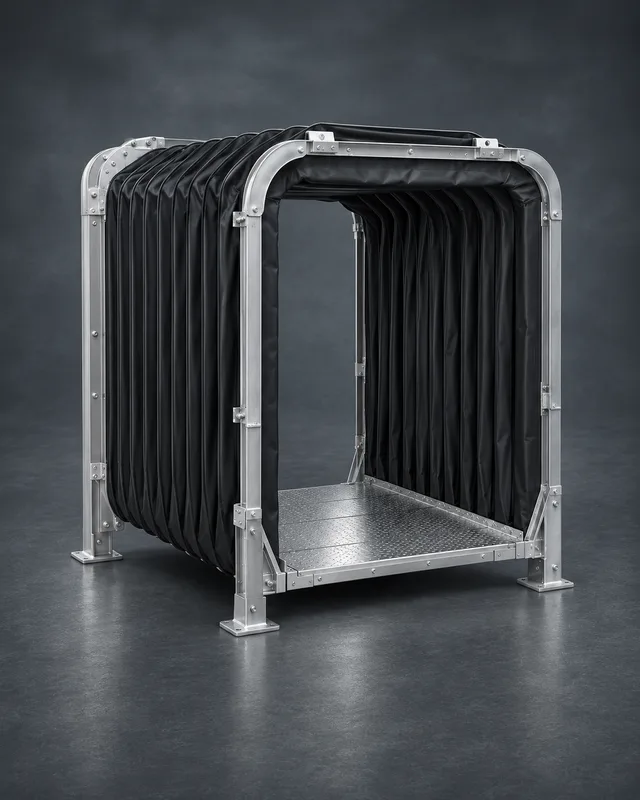
Pack the assembly that was ordered
A complete gangway, an enclosure-only supply and separate replacement panels have different handling needs. Identify the shipped boundary and orientation before designing the package. Use the approved handling and storage information for the actual construction. A generic crate specification based only on gross weight can omit the frame support or fold protection required to preserve the delivered geometry.
Define support and restraint points
The packing design should identify the permitted support, restraint and lifting provisions. Flexible bellows must not become an assumed load-bearing strap. Ask how transport loads are kept away from vulnerable folds, finished surfaces and unsupported edges. Any temporary transport frame or brace needs identification and approved removal information. This article does not provide rigging instructions or authorize improvised lifting arrangements.
Control compression and contact
A compact package may reduce freight volume but change the condition of a flexible enclosure. Obtain the allowed shipping configuration and storage duration where specified by the supplier's approved documentation. Prevent abrasive contact with frame edges and loose accessories. Do not assume an enclosure can be tightly compressed indefinitely because it flexes during operation; repeated movement and prolonged storage are different conditions.
Address environmental exposure
Review route, handling stages and expected storage conditions when agreeing protective packaging. The required protection depends on materials and construction as well as climate. Document any limits concerning moisture, sunlight, temperature or chemical contact from the applicable storage instructions. Protective wrapping should not be chosen solely for appearance, and any opening or ventilation provision must be consistent with the accepted packing design.
Preserve identity through unpacking
Label packages with assembly identity, revision, quantity and vehicle allocation where relevant. Separate loose parts in an identified schedule and protect their contact surfaces. Include handling documents and the agreed inspection records in an accessible delivery set. A crate number alone is insufficient if the receiving warehouse separates components and loses the relationship between bellows, frames and installation accessories.
Agree receiving and discrepancy checks
Define how the buyer records package condition, missing parts, frame damage and visible material deterioration on receipt. Photographs should show package and part identities as well as the damage. Keep suspect goods under the receiving organization's controlled disposition process. A shipping damage claim and technical acceptance are separate decisions; resolving the commercial claim does not itself approve the component for installation.
Application scenario
Illustrative export shipment: several car-specific assemblies arrive in one crate with loose, unidentified brackets. The buyer requests the original packing allocation and holds installation until each accessory is reconciled with its controlled assembly bill of materials.
Technical review checklist
| Review item | Required definition | Purpose |
|---|---|---|
| Boundary | Assembly and loose-part schedule | Define the shipment |
| Protection | Approved support and restraints | Avoid transport damage |
| Storage | Construction-specific limits | Preserve materials |
| Receipt | Identity and discrepancy evidence | Control acceptance |
Frequently asked questions
Can bellows be used as a lifting point?
Do not assume so. Use only the approved handling provisions for the actual assembly.
Does an intact crate prove an undamaged gangway?
No. Follow the agreed receiving checks for contents, configuration and visible condition.
Technical references and scope
Public sources reviewed November 14, 2026 provide industry or standards-scope context. They do not transfer another manufacturer's approvals to Railwheel. Confirm the controlled standard edition, vehicle documents and acceptance criteria with the responsible authority. This article is procurement guidance, not installation, repair or service-release instructions.
Discuss your railway gangway requirement
Send the approved drawing and revision, application, quantity, required evidence and destination to Amy Sun at amy@railwheel.com. Scope and feasibility are confirmed through technical review before quotation.
 WhatsApp
 WeChat