
Brake Shoe Acceptance Records: Connect the Delivered Part to Its Specification
Build a brake-shoe document review around material identity, part configuration, required tests and batch traceability rather than certificate quantity.
· Quality · Ma'anshan Railwheel Industrial Technology Co., Ltd.
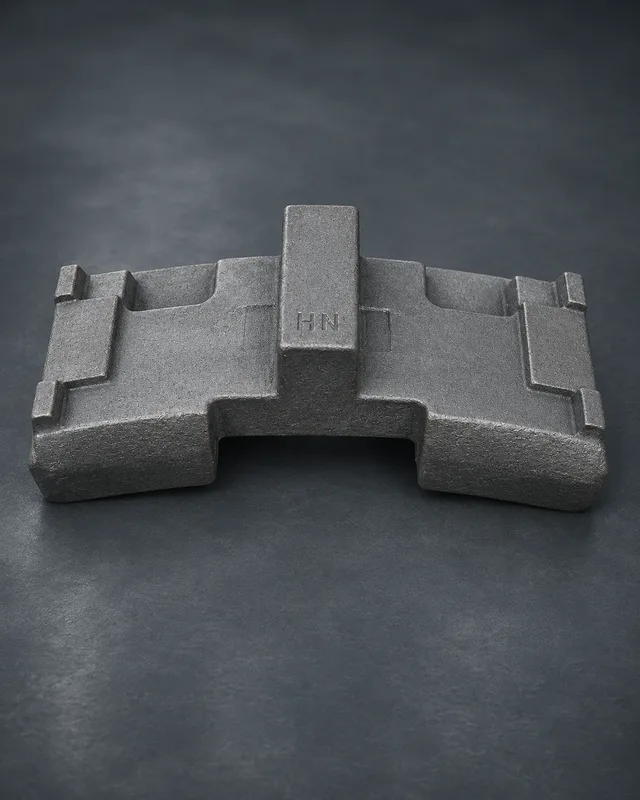
Begin with an acceptance baseline
The first document is the accepted purchase specification, not the supplier's certificate folder. Record the part number, drawing revision, friction-material identity and applicable requirements. A report can be genuine but irrelevant to the ordered part. Receiving inspection should compare every document to this baseline before checking results. This prevents a complete-looking file from concealing the wrong material or configuration.
Connect physical identity and document identity
Agree the required marking and traceability method before production. A package label may identify a batch while an individual part uses another controlled identifier; the records must explain the relationship. Do not assume that a manufacturer's logo or a general material description provides sufficient traceability. The buyer needs the linkage required by the contract, maintained through packing, receipt and inventory allocation.
Engineering principle: traceability preserves the ability to investigate
Traceability does not itself establish friction performance, but it preserves the connection needed to investigate or contain a discrepancy. If the buyer cannot map an accepted batch to installed or stocked items, even a good test report becomes difficult to apply later. Decide the required level of identity from the contract and the asset owner's process. Do not casually promise individual serialization when the controlled requirement uses another system, and do not reduce a required individual identity to an undifferentiated batch. The identity scheme and its operational use need to agree.
Distinguish type evidence from batch results
Qualification may address a defined material and design under a particular test program. Routine production acceptance addresses the specified characteristics of the supplied batch. Neither should be misrepresented as the other. Ask the supplier to identify the scope of each report, including the tested configuration and any applicable limitations. If the current product differs, request a formal applicability assessment instead of accepting an unqualified assurance.
Review nonconformances before accepting concessions
A concession should identify the exact departure, affected quantities and authorized acceptance decision. It is not a generic waiver of the specification. Keep the concession with the relevant inspection and traceability records so the depot can later identify affected stock. Where a discrepancy concerns the approved friction pairing, receiving personnel should escalate rather than make a service-suitability judgment.
Make stock release a controlled handover
At the final review, reconcile ordered and received quantities, package identity, part condition, documents and open deviations. State whether the stock is released, held or rejected and who made that decision. Do not mix approved and held parts because they share the same general description. A clear inventory status protects the downstream maintenance process from having to rediscover an unresolved purchasing issue.
Application scenario
Illustrative scenario: brake shoes arrive with correct quantities and a certificate naming a broad product family, but the required batch linkage is missing. The receiving team asks for the identity mapping and checks the material designation against the order. The stock remains on hold; collecting another unrelated certificate is not considered a resolution.
Technical review checklist
| Review item | Required definition | Purpose |
|---|---|---|
| Specification | Part, revision and material identity | Defines acceptance |
| Batch linkage | Part-to-package-to-report mapping | Supports traceability |
| Tests | Scope, results and applicability | Distinguishes qualification from release |
| Disposition | Open deviations and authorized decision | Controls stock status |
Frequently asked questions
Is a supplier quality certificate enough to release brake shoes?
No. Organization-level certification does not replace the product and batch evidence required by the purchase specification.
Can held stock be mixed with accepted stock?
Not without preserving the controlled status and traceability required by the buyer's quality process.
Technical references and scope
Public sources reviewed November 14, 2026 provide industry or standards-scope context. They do not transfer another manufacturer's approvals to Railwheel. Confirm the controlled standard edition, vehicle documents and acceptance criteria with the responsible authority. This article is procurement guidance, not installation, repair or service-release instructions.
Discuss your railway brake shoe requirement
Send the approved drawing and revision, application, quantity, required evidence and destination to Amy Sun at amy@railwheel.com. Scope and feasibility are confirmed through technical review before quotation.
 WhatsApp
 WeChat