
Railway Bearing Adapters: Controlling the Bearing-to-Side-Frame Interface
Review bearing adapters through seating profiles, locating features and the approved bearing and side-frame arrangement, not bearing size alone.
· Bogie Interfaces · Ma'anshan Railwheel Industrial Technology Co., Ltd.
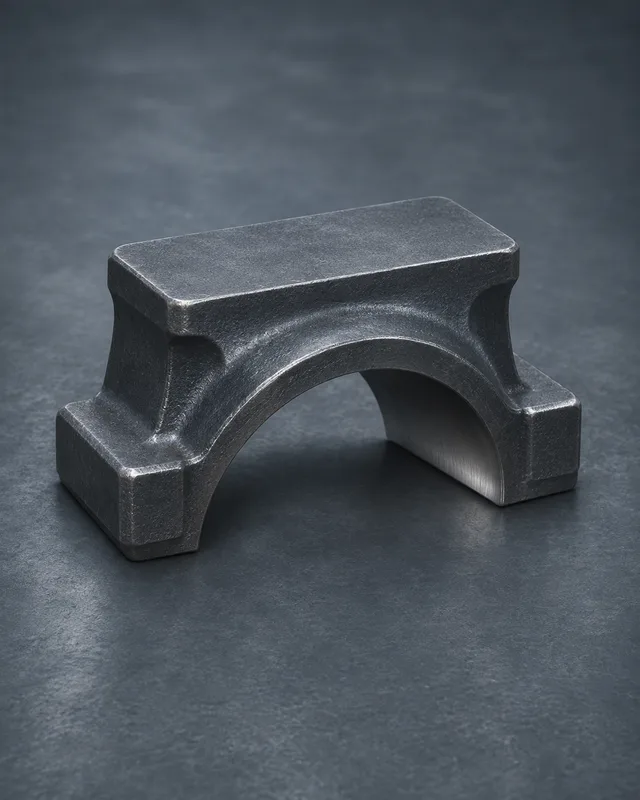
Identify the component's role before naming the spare
A bearing adapter is not a complete axle box or a roller bearing. It participates in the interface between the bearing arrangement and the bogie structure. The exact geometry and associated components depend on the approved design. An inquiry described only as a bearing housing can therefore invite quotations for entirely different scopes. Include the assembly drawing and identify the requested item on it.
Treat the contact profile as a functional interface
Overall width and height do not describe the seating profile. Contact contours, locating shoulders, clearances and their datum relationships determine how the adapter meets its adjoining parts. The procurement package should reference the controlled interface geometry and applicable tolerances. A nominal bearing designation is necessary context, but it does not independently define the adapter-to-side-frame interface.
Engineering principle: nominal area is not contact distribution
Dividing an applied force by an assumed area gives a nominal average pressure. It does not reveal the actual local pressure distribution at a curved bearing-adapter interface. Profile mismatch, edge contact and alignment can change where load is transferred without changing overall component width. This is why a basic outer-dimension report cannot represent the complete seating requirement. The responsible designer defines the contact geometry and acceptance basis. Procurement should preserve those controls and request the agreed evidence rather than attempt to approve the interface from an average-pressure estimate or an uninstrumented trial fit.
Check the configuration around the adapter
Record the side-frame arrangement, bearing designation and any specified pad or wear element. Identify whether those parts are included, reused or supplied separately. A change in one interface can affect the intended assembly even if a loose component appears to fit. Do not approve a substitution because a trial assembly is possible; dimensional fit is only one part of the controlled compatibility review.
Specify measurement that represents the drawing
Ask how the supplier will verify the critical seating and locating features. A report listing only basic external dimensions leaves the most important interfaces unexamined. Reference the drawing datums, profile controls and required measurement records. If a gauge is used, define its identity and the requirement it checks. A passed gauge result should not be interpreted as evidence for unrelated characteristics.
Compare new-part dimensions rather than worn contacts
A removed adapter can support identification, but service wear may change the very surfaces that establish fit. Treat sample measurements as observations, not as new-part manufacturing values. If the drawing cannot be recovered, the asset owner needs an authorized engineering definition before a production order. Commercial quotations should clearly distinguish preliminary identification from a confirmed replacement specification.
Application scenario
Illustrative scenario: a depot specifies a roller bearing size and receives two adapter offers with similar outer dimensions. One offer references a different pedestal arrangement. The buyer requests an interface compliance schedule, not a lower unit price, and resolves the seating and locating differences before deciding whether either offer is technically acceptable.
Technical review checklist
| Review item | Required definition | Purpose |
|---|---|---|
| Bearing side | Designation and controlled contact profile | Identifies the intended bearing interface |
| Structure side | Side-frame and locating drawings | Controls the other half of the connection |
| Associated parts | Pads and wear components by identity | Prevents an incomplete scope |
| Inspection | Datums, profiles and required records | Verifies more than the outline |
Frequently asked questions
Can adapters be selected by bearing size alone?
No. The approved structure-side interface, locating geometry and associated components must also be established.
Is a worn sample suitable as a manufacturing master?
Not without authorized engineering review. Wear can alter the contact surfaces and hide the original geometry.
Technical references and scope
Public sources reviewed November 14, 2026 provide industry or standards-scope context. They do not transfer another manufacturer's approvals to Railwheel. Confirm the controlled standard edition, vehicle documents and acceptance criteria with the responsible authority. This article is procurement guidance, not installation, repair or service-release instructions.
Discuss your railway bearing adapter requirement
Send the approved drawing and revision, application, quantity, required evidence and destination to Amy Sun at amy@railwheel.com. Scope and feasibility are confirmed through technical review before quotation.
 WhatsApp
 WeChat