
Product overview
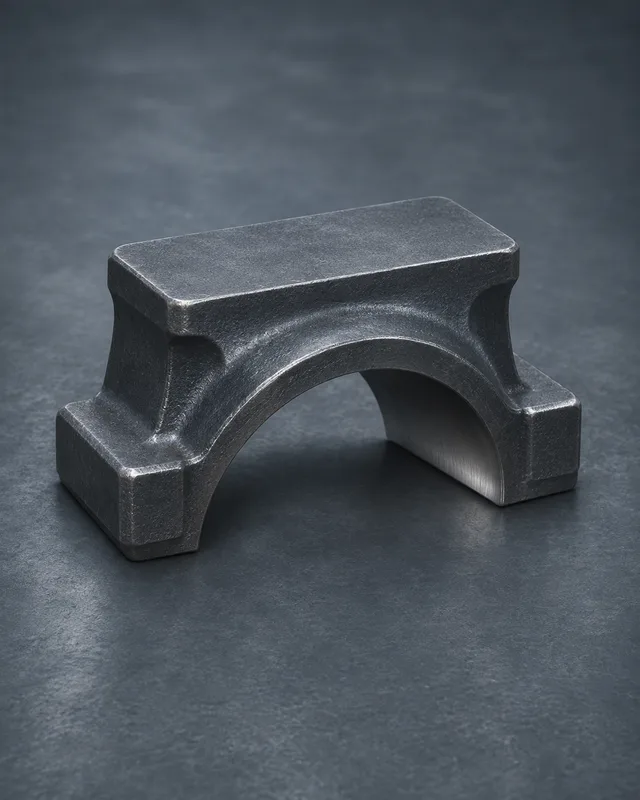
A railway bearing adapter is an interface component in a bogie bearing arrangement. It is not a complete axle box, a roller bearing or a universal bearing housing. Procurement must identify the bearing it interfaces with, the side-frame arrangement and any associated pad or wear component. Parts with similar external outlines can have different load paths, contact geometry and locating features.
Application and configuration
Start with the approved bogie assembly and bearing designation. Confirm seating profiles, contact widths, locating features and permissible interfaces to adjoining components. If the design includes a separate elastomeric or shear pad, identify whether it is in the supply scope and provide its controlled specification. A photograph cannot establish bearing compatibility or permitted substitution.
Technical information for quotation
| Bearing interface | Bearing designation, seating profile and contact requirements |
|---|---|
| Bogie interface | Side-frame pedestal geometry and approved locating features |
| Supply boundary | Adapter only or adapter with separately specified pad |
| Material and finish | Grade, casting or machining requirements and surface protection |
| Acceptance | Datums, tolerances, examination requirements and identification |
Manufacturing and supply review
The manufacturing proposal should distinguish the blank route from finish machining and inspection. Confirm material control, any required heat treatment, critical seating surfaces and identification. Do not substitute a material or change a contact profile because an alternative appears dimensionally close. Engineering approval must precede any departure from the baseline drawing.
Inspection and documentation
The inspection plan should identify the critical profiles and datum system, not just overall dimensions. Agree how seating surfaces and locating geometry will be measured. Any material tests, surface or internal examination and pad-bond evidence are contract-specific. Connect the inspection record to the component or manufacturing batch as required by the purchase order.
Packaging and shipment
Protect machined seating surfaces, keep paired or associated components identified and prevent unrestrained metal-to-metal contact. Specify whether pads are shipped installed or separately, and include storage precautions for any non-metallic components.
Request a technical quotation
Send the controlled drawing and revision, vehicle or bogie application, quantity, exact standards and editions, acceptance plan, required documents, packing requirements and destination. Amy Sun will coordinate technical and commercial clarification before a supply commitment. This listing does not confirm stock availability, certification or model interchangeability.
amy@railwheel.com | WhatsApp: +86 17755518921
Frequently asked questions
Is a bearing adapter the same as an axle box?
No. Their function and assembly scope differ. Use the approved bogie and bearing arrangement to identify the exact part required.
Does the adapter quotation include a rubber pad?
Only when the pad is explicitly specified and included in the confirmed scope. Provide its drawing, material and acceptance requirements separately.
Can an adapter be selected from bearing size alone?
No. The side-frame interface, contact profiles, locating features and approved assembly also have to match.
Related railway components
- Railway Bearing
- Railway Axle Box
- Railway Side Frame
- Railway Wheelset
- Quality control and inspection coordination
- Manufacturing capabilities
Industry category reference
Wabtec truck-system component categories. Provided for industry context only; no affiliation, equivalent design or shared approval is implied.
 WhatsApp
 WeChat