
Matched Bogie Spring Groups: Configuration, Identification and Traceability
Control spring groups as defined assemblies: position, constituent part numbers, matching rules and records must remain connected through delivery.
· Suspension · Ma'anshan Railwheel Industrial Technology Co., Ltd.
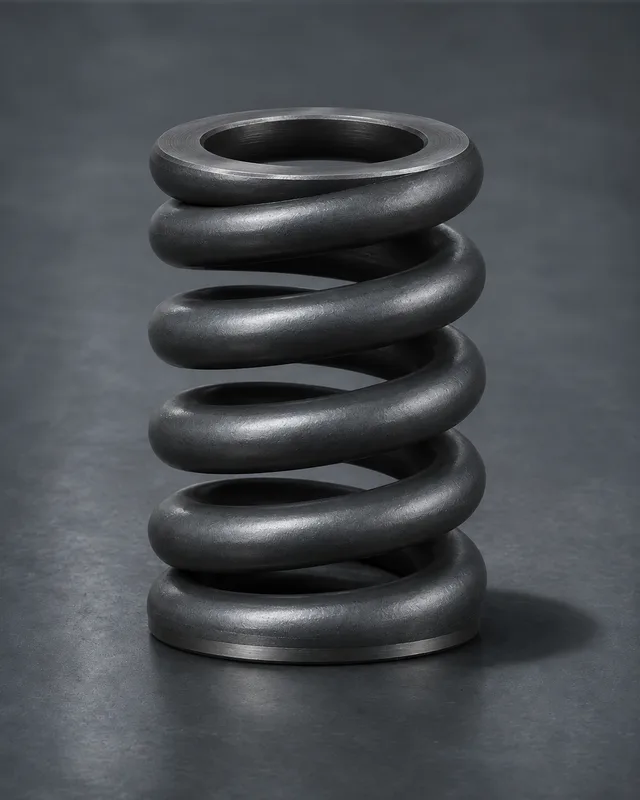
A collection of springs is not automatically a spring group
A group has a defined composition and installation arrangement. It may contain different part numbers and, in some designs, concentric members. Ordering a total spring quantity without a position schedule loses this definition. The RFQ should identify the bogie assembly, group locations and quantity of each constituent. Avoid describing the complete group with the number stamped on one accessible spring.
Define what matching actually means
Matching must refer to a measurable project requirement: a controlled part combination, specified grouping by functional results or another approved criterion. It must not be an informal promise that the springs look similar. Ask who assigns the groups, what records support that assignment and whether the group identity must survive shipment and storage. Do not invent a universal permissible variation between springs; obtain the designer's limits.
Engineering principle: group stiffness depends on engagement
In an ideal parallel arrangement where every spring experiences the same displacement and remains engaged, group stiffness is the sum of the individual stiffnesses. That simplified relationship is not valid unchanged when some members engage later, have different installed conditions or are arranged differently. This explains why a group schedule needs both constituent properties and assembly information. The same total piece count can describe different effective arrangements. A supplier should therefore quote the controlled group, not choose an assortment whose nominal rates happen to add to a target. Only the approved suspension definition establishes the required engagement and load-sharing behavior.
Resolve nested arrangements before manufacture
Where springs are nested, document their relative positions and any specified winding directions, clearances or seat details. A supplier should not infer these from a generic bogie name. Review the complete assembly rather than checking each spring in isolation. A component that meets its individual dimensions may still belong to the wrong group or revision, so the inspection plan needs both part-level and configuration-level checks.
Make the packing list an assembly-control document
Packaging should preserve the group identity through transport. State whether each package contains one complete group, several identified groups or separate constituent batches. The packing list should identify quantity by part number and group, rather than merely the total number of pieces. If the receiving depot splits packages for storage, its inventory process must retain the information required for approved assembly.
Handle shortage and substitution as controlled exceptions
When one spring in a group is missing or rejected, replacing it with a visually similar item may invalidate the approved matching basis. The purchasing team should request a documented disposition that identifies the affected group and the proposed replacement evidence. The authority responsible for the suspension definition decides whether individual replacement, regrouping or complete-set replacement is permitted. Commercial urgency cannot resolve that technical question.
Application scenario
Illustrative scenario: a workshop receives enough individual springs to complete four bogies, but no position or group identifiers. Quantity acceptance alone would conceal the configuration risk. The receiving team checks the bill of materials and matching requirements, asks the supplier for the missing identity schedule, and keeps the springs on hold until their intended allocation is established.
Technical review checklist
| Review item | Required definition | Purpose |
|---|---|---|
| Composition | Part numbers and quantities per position | Prevents incomplete sets |
| Matching | Approved grouping criterion and records | Avoids appearance-based grouping |
| Identification | Part, batch and group references | Maintains the configuration link |
| Packing | Package-to-group schedule | Supports controlled receipt and storage |
Frequently asked questions
Should every group use identical springs?
Not necessarily. The approved assembly can define different constituents. Follow its bill of materials and position schedule.
Can a rejected group member be replaced separately?
Only according to the approved matching and maintenance rules. The responsible authority must determine whether the replacement preserves the group definition.
Technical references and scope
Public sources reviewed November 14, 2026 provide industry or standards-scope context. They do not transfer another manufacturer's approvals to Railwheel. Confirm the controlled standard edition, vehicle documents and acceptance criteria with the responsible authority. This article is procurement guidance, not installation, repair or service-release instructions.
Discuss your railway spring requirement
Send the approved drawing and revision, application, quantity, required evidence and destination to Amy Sun at amy@railwheel.com. Scope and feasibility are confirmed through technical review before quotation.
 WhatsApp
 WeChat